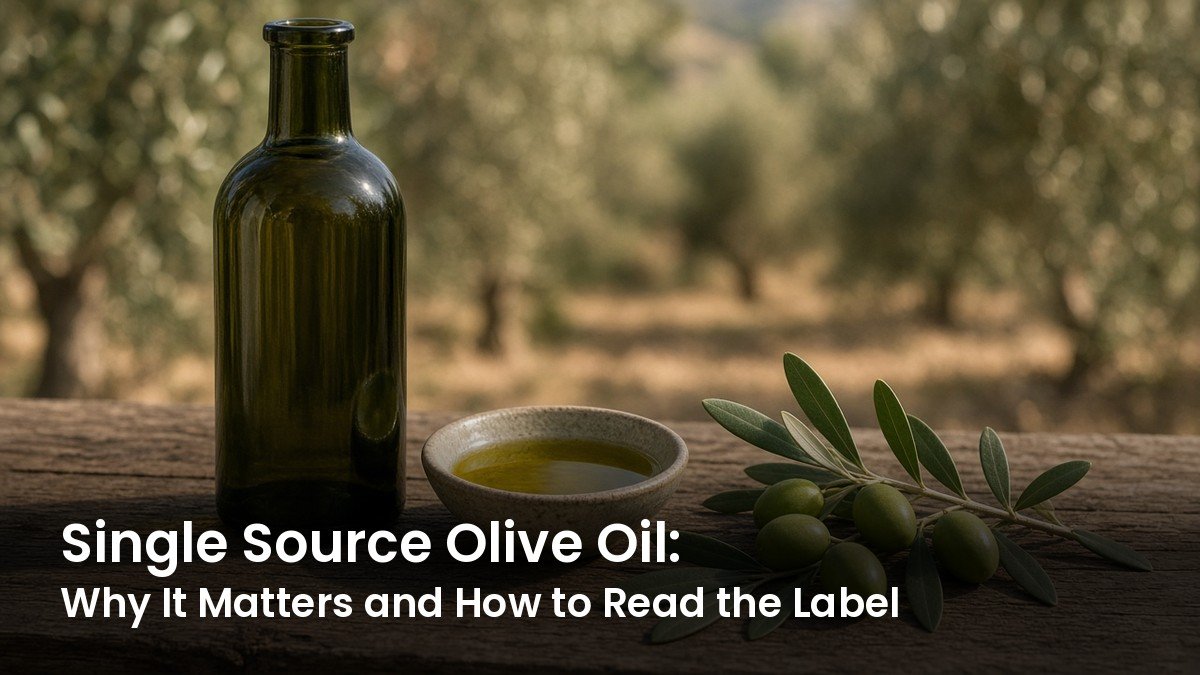
Grab a bottle of olive oil at the grocery store and turn it around. Odds are the back label says something like “packed in Italy with oils from Spain, Greece, Tunisia and Portugal.” That one line tells you a lot. Single source olive oil, meaning oil from one estate, one region or at least one country, is easier to trace, easier to date and more likely to still taste like olives when it reaches your kitchen.
This isn’t about being fancy. It’s about getting what you pay for, and getting the parts of olive oil that are actually good for you.
What “single source olive oil” means
You’ll see a few versions of the idea on labels:
- Single estate means the olives were grown and usually pressed on one farm. This is the most traceable kind.
- Single origin means all the olives came from one region or country, though possibly from many growers.
- PDO or PGI (Protected Designation of Origin, Protected Geographical Indication) are European Union labels. A PDO oil has to be produced, processed and prepared in a named area under set rules. PGI is a little looser but still ties the oil to a place.
A blend is the opposite: oil bought from several countries, often from different harvests, mixed and bottled somewhere else. Blends aren’t automatically bad. But the more sources go into a bottle, the harder it is for anyone, including the bottler, to tell you how old the oil is or how it was handled.
Why the source matters
Freshness is the whole game
Olive oil is fruit juice, not wine. It doesn’t get better with age. Heat, light and air slowly break it down, and the good compounds go first.
When researchers at the UC Davis Olive Center tested supermarket oils labeled “extra virgin” in 2010, 69 percent of the imported samples failed international taste standards for extra virgin, compared with 10 percent of the California samples. The reasons they gave were oxidation from heat, light or age, poor-quality olives or storage, and in some cases dilution with cheaper refined olive oil.
To be fair, UC Davis itself warns against reading that as “most olive oil is fake.” It was olive oil. It just wasn’t the grade the label promised, and quality changes from year to year. The useful lesson is simpler: long, mixed supply chains give oil more time to go stale before you open it.
The health benefits live in the fresh stuff
Extra virgin olive oil contains polyphenols, natural plant compounds such as hydroxytyrosol and oleocanthal. These are the reason good oil tastes bitter and gives a peppery tickle at the back of your throat.
Here’s what’s well supported and what isn’t:
- The European Food Safety Authority reviewed the human studies and concluded that olive oil polyphenols help protect blood lipids from oxidative damage. The EU only allows that claim on oil with at least 5 mg of hydroxytyrosol and related compounds per 20 grams (about 1.5 tablespoons), eaten daily.
- In the U.S., the FDA allows a qualified health claim that about 1.5 tablespoons a day of oils high in oleic acid, like olive oil, may reduce the risk of heart disease when they replace saturated fat. “Qualified” means the evidence is supportive but not conclusive.
- EFSA turned down other claims that were submitted, including blood pressure and anti-inflammatory claims. So be wary of any bottle promising to fix a long list of health problems.
The catch is that polyphenol levels vary a lot from oil to oil and fall as the oil ages. A fresh, well-made oil can easily clear the EU threshold. A tired blend that sat in a warehouse may not. Single source oil doesn’t guarantee more polyphenols, but it’s much more likely to carry a real harvest date, and freshness is what protects them.
You can actually check it
With one estate or one PDO region, there’s a name, a place and usually a harvest year. Someone is accountable. With a five-country blend, you’re trusting a chain you can’t see.
How to read an olive oil label, step by step
Take this list to the store. It takes about a minute per bottle.
- Look for a harvest date. This is the best single sign of quality. Pick the most recent harvest you can find, and try to use the oil within about 18 months of it. A “best by” date alone tells you much less, because bottlers set it themselves.
- Check where the olives came from. “Product of Italy” or “packed in Italy” can mean only the bottling happened there. Look for the country of origin of the olives themselves, a single estate name or a PDO/PGI seal.
- Look for a cultivar. Names like Koroneiki, Arbequina, Picual or Coratina tell you the olive variety. Producers who name it usually care about traceability. Picual and Coratina tend to be higher in polyphenols and more peppery. Arbequina is milder.
- Choose a dark bottle or a tin. Clear glass lets light in, and light speeds up spoilage. Skip clear bottles sitting under bright store lights.
- Check acidity if it’s listed. Extra virgin has to be at or below 0.8 percent free acidity. Lower numbers, like 0.2 to 0.3 percent, often point to healthy fruit and careful pressing. It’s a helpful hint, not a guarantee.
- Taste it at home. Pour a spoonful. Good extra virgin smells green and fresh, like cut grass, tomato leaf or green apple. It should taste a little bitter and leave a peppery sting in your throat, sometimes enough to make you cough. Greasy, waxy, flat, or like crayons or old nuts means it’s stale or rancid.
Making good oil fit your budget
Single source oil does cost more per bottle. Here’s how to keep it reasonable:
- Think in cost per tablespoon. For example, a $24 bottle of 500 ml holds about 33 tablespoons, so roughly 73 cents each. If you use a tablespoon or two a day, that’s a small line in a monthly family budget.
- Use two oils. Keep a fresh single source extra virgin for salads, drizzling and dipping, where you taste it and get the most from it. Use a cheaper, decent oil for everyday sautéing.
- Buy a size you’ll finish. Once opened, aim to use it within a month or two. A huge tin that goes stale is no bargain.
- Store it right. Cap on, in a cool, dark cupboard, away from the stove. The fridge isn’t needed.
The bottom line
You don’t need to become an olive oil snob. Look for a harvest date, a named place and a dark bottle, then trust your taste buds. Single source olive oil makes those checks easy, which is why it’s worth the small extra cost for the oil you eat raw.
This article is for general information only and isn’t medical advice. See our health disclaimer.