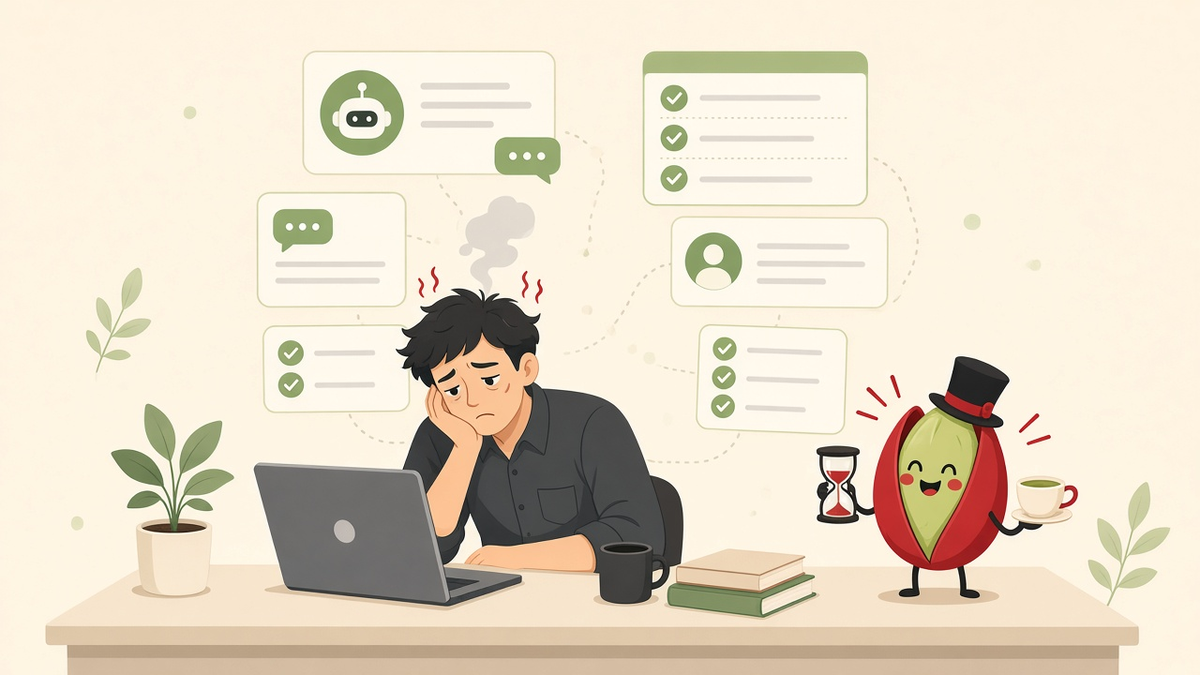
You didn’t write a single paragraph today. You didn’t build the spreadsheet or draft the deck. The AI did. So why does your brain feel like an overcooked pistachio by 3 p.m.?
Welcome to AI brain fry. It’s not just you, and it’s not a character flaw. It’s what happens when your job quietly changes from making things to checking things at machine speed.
Let’s crack it open.
What Is AI Brain Fry?
In March 2026, researchers from Boston Consulting Group published a study in Harvard Business Review that gave this feeling a name. They surveyed 1,488 full-time U.S. workers and defined AI brain fry as mental fatigue from excessive use or oversight of AI tools beyond your cognitive capacity (HBR, 2026).
People described a “buzzing” feeling or mental fog: trouble focusing, slower decisions, and headaches. Some had to physically step away from the computer to “reset.”
About 14% of the AI users in the study said they’d experienced it. Marketing roles reported it most (26%), but it showed up in operations, engineering, finance, HR and IT too. In other words: this isn’t just a developer problem. If you work with a screen and a chatbot, it’s your problem too.
Why Reviewing AI Output Wears You Out
Here’s the twist. The same study found that when AI takes over repetitive tasks, burnout scores actually go down. The trouble starts with oversight: the babysitting.
Workers whose AI tools needed heavy monitoring reported 14% more mental effort, 12% more mental fatigue and 19% more information overload. Three things are going on.
1. Every output is a tiny decision
“Is this right? Is this close enough? Do I fix it or regenerate?” Multiply that by a few hundred times a day and you’ve got classic decision fatigue. The AI doesn’t get tired. You do.
2. Speed sets the pace, not you
Your AI can produce five drafts before you finish your coffee. When output is instant, there’s constant pressure to keep up, and “I’ll review that later” turns into a 40-tab backlog.
3. Flow-state lock
AI work can be weirdly absorbing. One more prompt, one more fix. Hours vanish. You forget to blink, stand, drink water or eat lunch. Then the body sends the bill: dry eyes, a stiff neck, tight hips and a brain that won’t switch off at bedtime.
7 Ways to Recover from AI Brain Fry
None of these require a retreat in the mountains. Pick two to start.
1. Work in 90-minute blocks (with a real timer)
Set a timer for about 90 minutes of focused AI work, then take a 10–15 minute break away from screens. Not Slack. Not your phone. A walk, a stretch, a window. Your attention is a battery, not a firehose.
2. Batch your reviews
Instead of approving AI output the second it appears, batch it. Let drafts pile up, then review them in one or two scheduled sessions. Fewer context switches means fewer tiny decisions draining your tank.
3. Write a “good enough” checklist
Decide your standards before you review. Three to five quick criteria (“facts checked, tone fits, no made-up numbers”) turn endless judgment calls into a simple yes/no. Your future self will send a thank-you card.
4. Blink, look away, and move
Here’s a fun fact from the American Academy of Ophthalmology: people normally blink about 15 times a minute, but only about 5 to 7 times a minute while using screens (AAO). Fewer blinks, drier eyes. A popular rule of thumb is 20-20-20: every 20 minutes, look at something about 20 feet away for 20 seconds. While you’re at it, stand up and roll your shoulders. Your neck has been doing unpaid overtime.
5. Build a wind-down buffer
AI brain fry loves to follow you to bed. Put a hard stop on work-related prompting at least 30 minutes before sleep. The CDC lists turning off electronic devices at least 30 minutes before bedtime as a healthy sleep habit, and notes adults need 7 or more hours a night (CDC). Dim the lights, read paper, or do something gloriously boring.
6. Track how you actually feel
Some people use wearables to watch trends like heart rate variability (HRV) or sleep. That can be a helpful nudge, but you don’t need gadgets. A simple 1–5 “brain battery” score at lunch and at the end of the day will show your patterns in a week. Notice which days you fry, and what you did on them.
7. Keep one task 100% human
A lot of AI fatigue isn’t physical. It’s the creeping sense of “Am I even good at my job anymore?” Protect one piece of work each day that you do yourself, start to finish: a sketch, a hand-written plan, a tricky email. Mastery is a nutrient. Don’t let it go missing from your diet.
When It’s More Than Brain Fry
Everyone has fried days. But if exhaustion, low mood, poor sleep or a sense of dread hang around for weeks, that’s worth taking seriously. This article is for education only and isn’t medical advice. Please talk with a doctor or a licensed mental health professional, and if you’re in crisis in the U.S., you can call or text 988.
FAQ
Is AI brain fry a medical diagnosis?
No. It’s a term researchers used in a 2026 Harvard Business Review study to describe mental fatigue from heavy use or oversight of AI tools. It’s a useful label for a real experience, not a clinical condition.
Does using AI always make burnout worse?
No. The same research found that using AI to replace routine, repetitive tasks was linked to lower burnout scores. The strain comes mostly from constant monitoring and from AI adding to your workload.
What’s the fastest way to recover from a fried afternoon?
Step away from all screens for 10–15 minutes, move your body, drink some water, and look at something far away. Then come back and batch your remaining reviews instead of reacting to each one.
The Pistachio Bottom Line
AI is a fantastic intern. But you’re still the editor, and editors need breaks. Protect your attention, your eyes and your sleep, and you’ll get the speed of AI without the fried brain.