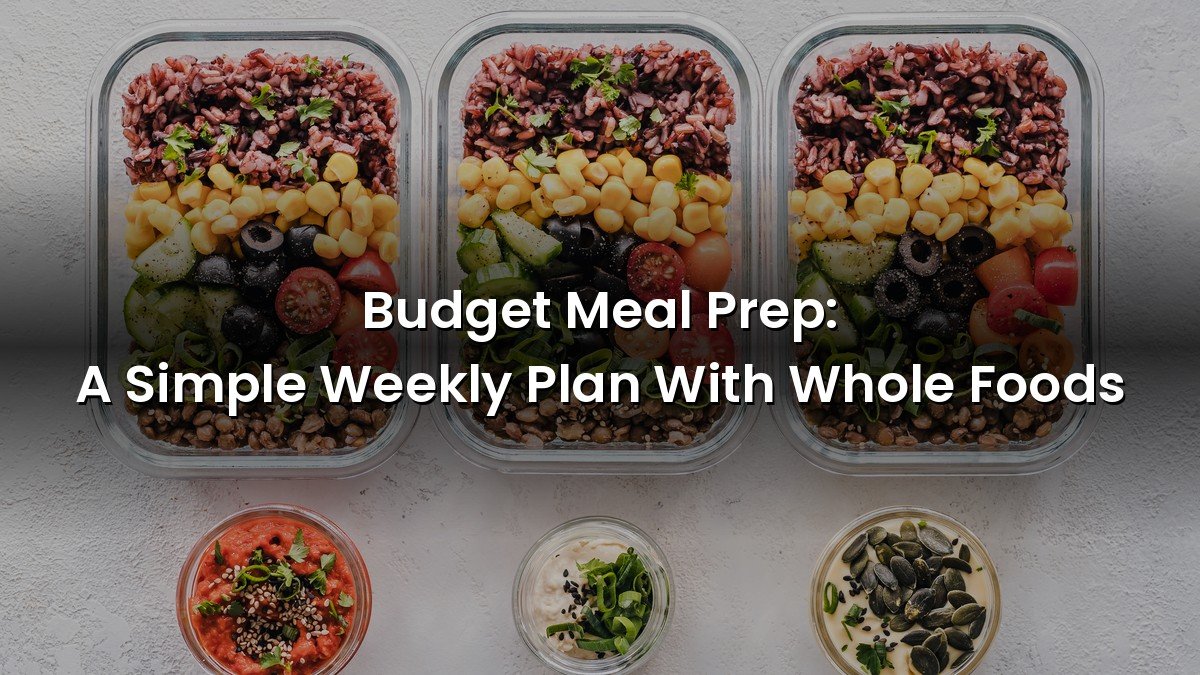
An hour or two of cooking on Sunday can cover most of your weekday lunches and dinners, and it usually costs less than buying them. Budget meal prep doesn’t mean eating the same sad box of rice five days in a row. It means cooking a few flexible whole-food “building blocks” once, then mixing them into different meals all week.
Here’s the whole system first, then each step in detail.
The budget meal prep plan at a glance
- Check what you have (10 minutes): fridge, freezer and pantry first.
- Plan five meals (10 minutes): built from one grain, one or two proteins and two or three vegetables.
- Shop one list (in store or online): organized by section, with unit prices in mind.
- Cook three base foods (about 90 minutes): a grain, a protein and a tray of roasted vegetables, plus one sauce.
- Store it safely: shallow containers, eaten within 3 to 4 days, the rest frozen.
Why planning ahead pays off
The biggest win from meal prep isn’t the containers. It’s the plan. When you know what’s for dinner, you’re less likely to order takeout at 7 p.m. because nothing sounds doable.
There’s some research behind the idea, too. A 2017 study of 40,554 French adults in the NutriNet-Santé cohort found that people who planned meals ahead were more likely to have better overall diet quality and more food variety than people who didn’t plan. Planners also had lower odds of obesity.
Two honest caveats: this was a one-time survey, so it shows an association, not proof that planning causes better eating. And the participants were volunteers who chose to join a nutrition study. Still, it fits common sense: a plan makes the healthy option the easy option.
The USDA’s SNAP-Ed guide Eat Right When Money’s Tight puts planning first for the same reason: when you plan meals and snacks for the week, you know what to buy and you can put leftovers to good use.
Step 1: Shop your own kitchen first
Before writing a single grocery item, open the fridge, freezer and cupboards. Look for:
- Anything that needs using up soon (half a bag of spinach, a few eggs, the last of the carrots)
- Pantry staples you forgot you had: rice, oats, pasta, canned beans, canned tomatoes
- Frozen vegetables or leftovers hiding in the back
Build at least one or two of this week’s meals around what’s already there. Food you already paid for is the cheapest food you’ll eat all week.
Step 2: Plan five meals from a few building blocks
Don’t plan seven unique recipes. Pick a small set of ingredients that can show up in different outfits. A simple formula:
- 1 whole grain: brown rice, oats, whole-wheat pasta, barley or potatoes
- 1 or 2 proteins: dried or canned beans, lentils, eggs, chicken thighs or canned fish
- 2 or 3 vegetables: carrots, cabbage, onions, frozen broccoli, frozen spinach, peppers
- 1 sauce: a quick yogurt-garlic sauce, salsa, peanut sauce or a lemon vinaigrette
Here’s how one batch can become five different meals:
- Grain bowls: rice + beans + roasted vegetables + salsa
- Stir-fry night: leftover rice + frozen vegetables + eggs + soy sauce
- Soup: lentils + canned tomatoes + carrots and onions
- Wraps: tortillas + chicken or beans + cabbage slaw + yogurt sauce
- “Clean out the fridge” plate: whatever’s left, topped with a fried egg
Leave one or two nights unplanned for leftovers, plans that change or a night out. A plan that expects real life is a plan you’ll keep.
Step 3: Shop smart for whole foods
Whole foods don’t have to be fancy or expensive. Some of the most nutritious staples are also among the cheapest in the store. These habits from the SNAP-Ed guide make a real difference:
- Eat before you shop. It’s easier to stick to your list when you’re not hungry.
- Try store brands. They’re often the same quality for less.
- Compare unit prices. The small “price per ounce” label on the shelf tag tells you which size is the actual deal.
- Lean on frozen and canned produce. Large bags of frozen vegetables last far longer than fresh, so less ends up in the trash. For canned vegetables, look for “low sodium” or “no salt added” on the label.
- Keep dried beans and lentils around. The guide notes that dried beans and peas are a good source of protein and fiber and can last a year or more without spoiling. Lentils don’t need soaking, which makes them an easy weeknight pick.
Group your list by store section (produce, pantry, dairy, frozen) so you make one loop instead of zig-zagging past the snack aisle three times.
Step 4: Cook three base foods in about 90 minutes
Batch-cook the building blocks rather than finished meals. That keeps things flexible and keeps food from getting soggy. A simple order that uses your stove and oven at the same time:
- Start the oven (400°F / 200°C) and chop vegetables into similar-sized pieces. Toss with a little oil and salt, spread on a sheet pan and roast for 25 to 35 minutes.
- Start the grain on the stove while the vegetables roast.
- Cook the protein: simmer lentils, bake chicken thighs on a second tray, or hard-boil a batch of eggs.
- Make one sauce while everything finishes. A sauce is what makes Wednesday’s bowl taste different from Monday’s.
- Cool, portion and label. Clean as you go, and you’re done.
If 90 minutes feels like a lot, start with just one thing, like a big pot of grains or a tray of roasted vegetables. Even half a prep saves weeknight effort.
Step 5: Store it safely so nothing goes to waste
Meal prep only saves money if you actually eat it. FoodSafety.gov’s cold food storage chart gives clear limits for a fridge at 40°F (4°C) or below:
- Cooked meat or poultry leftovers: 3 to 4 days in the fridge, or 2 to 6 months in the freezer
- Soups and stews: 3 to 4 days in the fridge, or 2 to 3 months in the freezer
The freezer times are about quality; food kept frozen at 0°F (-18°C) stays safe longer. That gives you an easy rule: refrigerate what you’ll eat in the next three or four days, and freeze the rest right away. Shallow containers help food cool quickly. Label them with the date so “mystery container” never happens.
Make it a habit (and watch the savings add up)
Pick a regular prep time, like Sunday afternoon or Wednesday evening, and keep a running list of the meals your household actually liked. After a few weeks you’ll have a rotation you can plan in five minutes.
If you want to see the payoff, jot down your weekly grocery and takeout spending for a month. Money you stop spending on last-minute meals can go somewhere useful, like an emergency fund.
Your quick checklist
- Shop your kitchen first
- Plan five meals from one grain, one or two proteins and two or three vegetables
- Eat first, use a list, compare unit prices, lean on frozen and canned
- Roast, simmer and make one sauce in a single session
- Fridge for 3 to 4 days, freezer for the rest, with dates on the lids
A little planning on the weekend buys you calmer weeknights, better meals and a lighter grocery bill. That’s a pretty good trade for one afternoon.
This article is general education, not personal medical or nutrition advice. If you have a health condition, food allergy or special diet, check with a qualified health professional or registered dietitian. See our Health Disclaimer.
Featured photo: “Meal prep glass container” by Ella Olsson, CC BY 2.0, via Wikimedia Commons; title text added.
